about our leaders
Christopher S. McAbee and Cearah Hamilton serve as the visionary leaders of WE Collective.
Together, they are committed to creating safe, intentional spaces where people can encounter Jesus, grow in authentic community, and be activated to impact their families and the Twin Cities. With backgrounds in worship leadership, strategy, prayer, and community development, they steward WE Collective with both spiritual depth and structural excellence.
Their shared conviction is simple: encounter should lead to formation, formation should lead to activation, and activation should produce real impact.
about our comminity

We're Building a Movement — One Encounter at a Time.

[w]orship [e]ncounters collectives
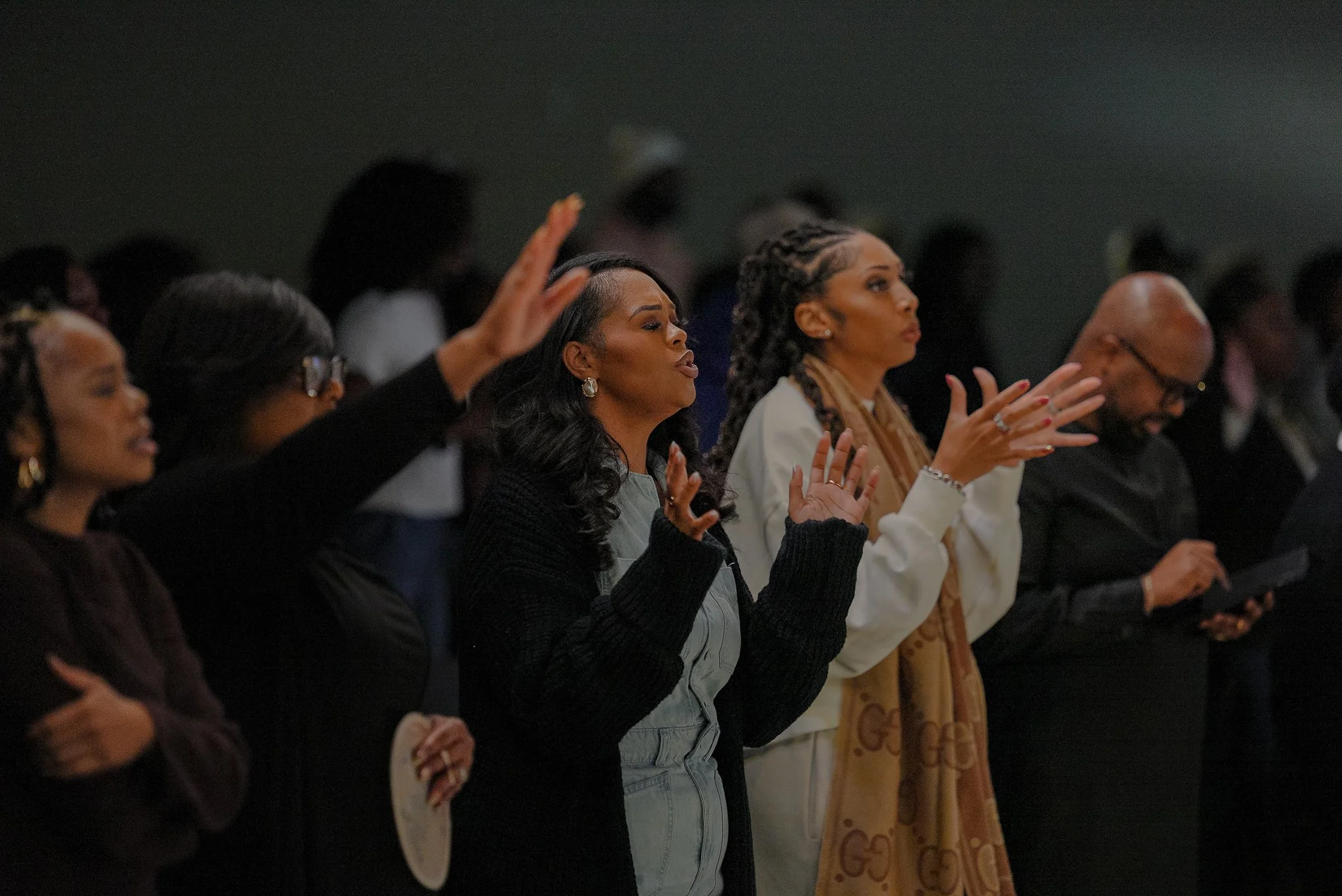
The [WE]Worship Encounters Collective is a faith-based nonprofit creating spaces for spiritual encounter, leadership formation, and community empowerment across the Twin Cities — equipping believers, creatives, and emerging leaders to walk boldly in their purpose.
The WE Collective Story
Too many people leave powerful moments with God and go home not knowing what to do next. They're inspired but not equipped. They have a calling but lack community. They're spiritually hungry but have nowhere to go that meets them where they actually are.
The WE Collective was built for that gap.
Founded on the belief that everyday people can carry God's presence, build lives of prayer, and walk in real purpose — WE Collective has grown into a full movement ecosystem: worship experiences, prayer gatherings, leadership development, creative empowerment, and community formation — all working together to take people from first encounter with God to sustained, community-rooted impact.
We don't just host events. We build people. And people build communities.

our Mission
The mission of WE Collective is to cultivate spiritually formed, community-rooted leaders by creating intentional spaces for encounter, formation, activation, and measurable impact.
THE JOURNEY WE TAKE PEOPLE ON
How We Think About Change
Everything we do moves people through one intentional journey:
Encounter → Formation → Activation → Impact
First, people encounter God — in worship, in prayer, in community. Then they're formed — through teaching, discipleship, and spiritual rhythm. Then they're activated — equipped with practical tools, mentorship, and clarity about their calling. Then they create impact — in their families, workplaces, neighborhoods, and cities.
Every program we run lives somewhere on that journey. And every person who walks with us moves further along it.
our Christian
Beliefs
-
The Bible is God’s Word to all people. It was written by human authors under the supernatural guidance of the Holy Spirit. Because it was inspired by God, the Bible is truth without any mixture of error and is completely relevant to our daily lives.
(Deuteronomy 4:1-2; Psalms 119:11, 89, 105; Proverbs 30:5; Isaiah 40:8; Matthew 22:29; John 5:39; 16:13-15; 17:17; Romans 15:4, 16:25-26; 2 Timothy 3:15-17; Hebrews 1:1-2; 4:12; 1 Peter 1:25; 2 Peter 3:16) -
His presence assures us of our relationship with Christ. He guides believers into all truth and exalts Christ. He convicts people of their sin, God’s righteousness, and the coming judgment. He comforts us, gives us spiritual gifts, and makes us more like Christ. Evidence of the Holy Spirit is seen in the fruits of the Holy Spirit, speaking in unknown tongues, gifts of the Holy Spirit, etc.
(Genesis 1:2; Psalms 51:11; 139:7 ff.; Isaiah 61:1-3; Joel 2:28-32; Mark 1:10; Luke 1:35; 4:1; 11:13; 12:12; John 15:26; 16:7-14; Acts 1:5, 8; 2:1-4; 13:2; Romans 8:9-11, 14-16, 26-27; Galatians 5:22-23; 1 Corinthians 3:16, 12:1-11; Ephesians 1:13-14; 2 Peter 1:21; Revelation 22:17) -
The blood of Jesus Christ, shed on the cross, provides the only way of salvation through the forgiveness of sin. Salvation occurs when people place their faith in the death and resurrection of Christ as sufficient payment for their sin. Salvation is a gift given through the grace of God, and it cannot be earned through our own efforts.
(Isaiah 1:18; 53:5-6; 55:7; Matthew 1:21; 27:22-66, 28:1-6; Luke 1:68-69; 2:28-32; John 1:12; 3:16, 36; 5:24; Acts 2:21; 4:12; 16:30-31; Romans 1:16-18; 3:23-25; 5:8-10; 6; 1, 10:9-10; Corinthians 1:18; 2 Corinthians 5:17-20; Galatians 2:16, 20; 3:8, 13; Ephesians 2:8-10; Philippians 2:12-13; Hebrews 9:22-28; Revelation 3:20)
-
Prayer is our ability to communicate with God. Through Jesus’ salvation, we no longer need an intercessor to go between God and us; we can address Him directly. We believe that no monumental thing can be done without prayer preceding it and continuing through it.
(Psalms 145:18; Proverbs 15:29; Matthew 7:11; Luke 18:1; Romans 8:26; Philippians 4:6; Colossians 4:2; 1 Thessalonians 5:17; 1 Timothy 2:8) -
Man was created good and upright, but by voluntary transgression he fell into sin. His only hope of redemption is in Jesus Christ. Repentance is a commitment to turn away from sin in every area of our lives and to follow Christ. Through repentance we individually receive forgiveness of sins and appropriate salvation.
(Genesis 1:26-31, 3:17; Acts 2:38, 3:19; Romans 5:12-21) -
Jesus Christ will physically and visibly return to earth for the second time to establish his authority on earth. This will occur at a time undisclosed by scripture. So, we live everyday in expectation of Christ’s return.
(Matthew 24:30, 26:63-64: Acts 1:9-11; 1 Thessalonians 4:15-17; 2 Thessalonians 1:7-8; Revelation 1:7)
Empowerment Development
-
We cultivate environments where individuals deepen their relationship with God through worship, prayer, teaching, and discipleship. Spiritual maturity is the foundation for sustainable leadership and healthy community impact.
Outcome: Participants develop spiritual discipline, identity clarity, and personal conviction.
-
We provide structured opportunities for individuals to grow in leadership capacity through volunteerism, mentorship, responsibility-based roles, and hands-on experience in ministry and community initiatives.
Outcome: Participants transition from attendees to accountable leaders.
-
We foster authentic relationships and collaborative spaces that strengthen social bonds across generations and backgrounds. Community is not a byproduct — it is a strategy.
Outcome: Increased relational support systems and cross-community collaboration.
-
Through initiatives like The Manna Project and other outreach efforts, we mobilize participants to serve tangible needs in their neighborhoods. Empowerment must result in action.
Outcome: Measurable service hours, resources distributed, and documented community impact.